


It usually starts small.
Maybe the tap water tastes a little metallic one week. Maybe your kettle builds up that chalky white film again—faster than it should. Or maybe you just read something about contaminants in municipal supplies and it lingers in the back of your mind longer than you expected.
For most of us, water isn’t something we think deeply about. It’s just there. Reliable. Routine. You twist the handle, and it flows. But lately, there’s been a quiet shift. People are paying closer attention—not out of paranoia, but practicality.
And once you start noticing your water, it’s hard to un-notice it.
When “Safe” Doesn’t Always Feel Reassuring
Municipal water in many areas meets safety standards. That’s important. But safety standards and personal comfort aren’t always the same thing.
Chlorine is commonly used to disinfect water. It does its job well, but it can leave behind a taste and smell that some people just don’t love. In older neighborhoods, aging pipes may introduce trace metals. Rural properties using well water can face sediment, nitrates, or agricultural runoff.
None of this necessarily means your water is dangerous. But it does mean there’s room for improvement—especially if taste, odor, or long-term health considerations matter to you.
That’s where conversations about water quality become more personal than technical. It’s not just about meeting guidelines. It’s about how your water feels, smells, and tastes in daily life.
Because you don’t just drink it. You cook with it. Your kids drink it. You brush your teeth with it. It’s woven into your routine in ways you barely notice.
A Closer Look at Modern Filtration Options
Walk into any home improvement store and you’ll see shelves of filters—pitchers, faucet attachments, under-sink cartridges. They’re helpful, sure. But they vary widely in what they actually remove.
Over time, many homeowners begin looking at more comprehensive systems. That’s when reverse osmosis systems enter the conversation.
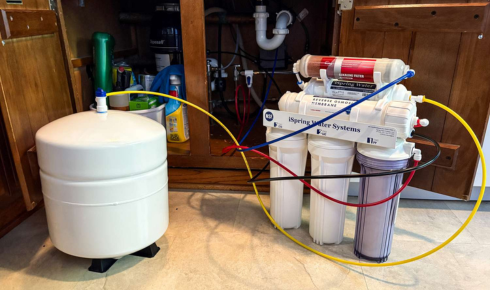
Unlike basic carbon filters that primarily reduce chlorine and improve taste, reverse osmosis (RO) works by pushing water through a semi-permeable membrane. That membrane blocks many dissolved solids, heavy metals, and other impurities at a microscopic level.
The result is water that’s noticeably cleaner—sometimes almost surprisingly so. First-time users often comment on how “crisp” it tastes. Coffee changes. Tea tastes brighter. Even ice cubes seem clearer.
Of course, RO systems aren’t perfect. They can produce wastewater during filtration, and they require periodic membrane replacement. But for many families, the trade-off feels worth it.
It’s less about chasing perfection and more about reducing what you’d rather not ingest.
Drinking Water Isn’t Just a Beverage
We tend to treat water as a simple thirst-quencher. But if you think about it, hydration plays a huge role in how we feel. Energy levels, digestion, skin health—all of it ties back to what we’re putting into our bodies every single day.
That’s why drinking water purification has become such a significant topic in home improvement discussions. It’s not flashy like remodeling a kitchen. It won’t get compliments from guests. But it affects you quietly, consistently.
Parents, especially, often say the same thing: they just want peace of mind. They want to know that when their child fills a cup from the sink, it’s as clean as reasonably possible.
It’s not about fear. It’s about responsibility.
The Economics of Cleaner Water
There’s also the cost angle—something people don’t always talk about.
Buying bottled water adds up fast. A case here, a refill there. Multiply that by months, then years. And then there’s the plastic waste, which many families are trying to reduce.
Installing a home purification system—whether under-sink RO or a more comprehensive filtration setup—can feel like a bigger upfront expense. But long-term, it often balances out. You stop hauling cases from the store. You refill reusable bottles. You trust what’s already flowing through your home.
It’s a shift in mindset as much as infrastructure.
Not Every Home Needs the Same Solution
One of the biggest misconceptions is that there’s a universal “best” system. There isn’t.
Urban apartment dwellers may only need chlorine and sediment reduction. Homes with well water might require iron filters, UV purification, or multiple stages of treatment. Hard water areas might pair filtration with softening systems for better overall results.
Testing your water is the logical first step. It removes guesswork. Once you understand what’s present—minerals, chemicals, particulates—you can choose solutions that actually make sense.
There’s something empowering about that. Instead of reacting blindly, you’re making an informed decision.
The Everyday Difference
The real payoff isn’t dramatic. You won’t wake up one morning and feel like a new person because your filtration system was installed.
It’s subtler than that.
You might notice you’re drinking more water because it tastes better. You might stop buying bottled water without even thinking about it. Guests might comment—“This tastes really good”—and you’ll smile quietly.
Over time, those small moments stack up.
Water is foundational. It’s not glamorous. It doesn’t trend on social media. But it touches nearly every part of daily life.
And maybe that’s why more people are taking a second look at what flows from their taps. Not because they’re chasing some idealized version of purity—but because they want reliability. Consistency. Trust.
Clean water, at its core, is about confidence. Confidence in what you’re consuming. Confidence in the systems you’ve put in place at home.
It’s a quiet upgrade. But sometimes, the quiet upgrades are the ones that matter most.

